
Most writing about coping with divorce is about the feeling, and the feeling is not what the first year is mostly made of. The first year is made of a lease, a bank, a school run and a Thursday evening that has to be got through. The consistent report from people who are out the other side is that the feeling shifted when those did — not before, and not because they had worked on it directly.
Coping with divorce is the work of rebuilding an address, an income and a week at the same time, and letting the feeling follow what you have already done rather than waiting for it to lead. That is the whole argument of this page, and it is a practical claim rather than an inspiring one. What follows is the shape of the year, the parts that are ordinary rather than a sign something is wrong, and the points at which this site stops and somebody qualified starts.
Why is the week the unit, and not the day or the year?
The week is the unit because that is the interval a divorce actually breaks. People measure this in months because the legal process does. The thing that actually has holes in it is the week.
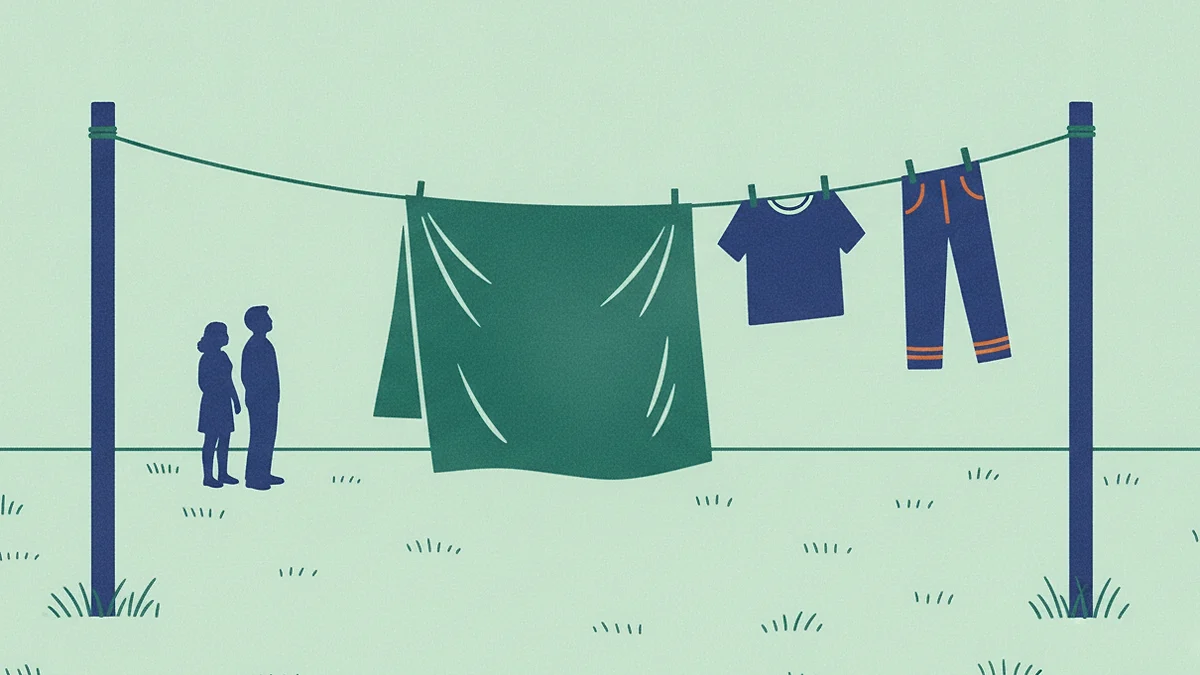
A marriage is a set of defaults distributed across seven days: who is in the house on a Wednesday evening, what happens on Saturday morning, who you tell when something small goes wrong. Divorce removes the defaults and leaves the slots. Imagine an ordinary Wednesday evening with nobody expected in the house and nothing arranged: that is the shape of the problem. Sunday afternoon is the one people name most often, and it is not sentimental — it is structurally the emptiest part of the week for someone who used to be half of a pair.
The practical version of this is unromantic: put two fixed points in the week, one on a weekday and one at a weekend, and keep them whether or not you feel like it. A fixed point is any commitment that happens on a set day whether or not you are in the mood for it — a class, a standing dinner, a shift somewhere that notices when you are missing. Not as therapy. As scaffolding, so that the week has a shape that does not depend on your mood to hold up.
How long does coping with divorce take?
Nobody knows, and no source this site could verify measures it. Anyone who hands you an interval is quoting another article.
You will find confident intervals everywhere — a year for every five of marriage, eighteen months, two years. None of them is a measurement. They circulate because they are comforting to type and impossible to check, and when traced they lead to other articles rather than to data.
This site will not print one. What can be said is what people describe: improvement arriving in uneven steps, each attached to something concrete rather than to the passage of time. The address stops being temporary. The paperwork gets into your own name. Somebody invites you to something and you go. The steps are not evenly spaced and there is usually at least one that goes backwards.
If you are counting months and finding yourself behind, you are behind a number that somebody made up.
What are the five stages of divorce good for?
They are good for vocabulary and useless as a map.
The five-stage model people reach for here was written about bereavement, not about divorce, and it was never a measured sequence. Its author spent years saying so.
It survives because it hands people vocabulary at a moment when they have none. That is a real service. Denial, anger, bargaining, depression and acceptance are useful as names for states you can otherwise only describe as “bad”.
They are useless as a map. People report them out of order, several at once, and repeatedly — acceptance on Tuesday and bargaining on Thursday, in the same week, about the same marriage. If you are trying to work out which stage you are on so you can tell how far you have come, the model is doing you active harm.
Why am I so angry after a divorce?
Because anger is the more bearable version of what is underneath it, and unlike the thing underneath it, anger has somewhere to point. It arrives early, outstays everything else, and is rarely aimed accurately. Friends get it. The lawyer gets it. The person who did not leave gets it, sometimes hardest. For instance, a friend who says something clumsy about the marriage can get a response out of all proportion to what she said.
It is worth understanding what it is for rather than trying to suppress it. Anger is mobile and it has a target; the thing underneath it is neither. Being furious is more bearable than being bereft, so the mind converts one into the other and holds the conversion for as long as it can.
The version worth watching is the case. The case is the argument you assemble in your head for a neutral observer who is never going to hear it — the evidence, the timeline, the things that would prove it. Almost everybody, at some point, starts building it. It is compelling to work on and it is the single most reliable way to keep the year long, because the jury is never going to be convened. Nobody is coming to rule that you were right. The people who report the sharpest turn are usually the ones who noticed they were preparing for a hearing that does not exist.
How do you cope with a divorce you did not want?
By separating the grief for the marriage from the grief for having had no say, because the one for having had no say does not respond to anything that helps the other. This is a different situation from the one most advice is written for, and it deserves saying plainly rather than being folded in.
There are two griefs running at once. One is for the marriage. The other is for having had no say, and that second one behaves less like a loss than like an injury — it produces helplessness rather than sadness, and it does not respond to any of the things that help with sadness.
What people in this position consistently describe is that the second grief eases when they get real authority over something again. Real authority means a decision, of any size, that is theirs alone and nobody has to agree to. The scale genuinely does not matter. What matters is that the last twelve months have been a sequence of things happening to you, and the pattern breaks with a decision rather than with an insight.
If what you actually want is the marriage back, none of the advice written for people who chose this will land, and there is no point pretending otherwise. That does not mean you are handling it badly. It means most of what you are reading was written for a different problem.
What about the money, and where does this site stop?
The money questions have real answers and none of them are on this site, because every one of them turns on where you live and on the specifics of your arrangement.
A great many people arrive at this subject because they cannot afford the thing they are being asked to do. Separating households costs money that was already committed. Legal help costs money. Staying costs something too.
Every question in that paragraph has a real answer and none of them are here. What you may be entitled to, what help exists, what it is called, whether it applies to you, what a separation does to any of it — all of that depends on your jurisdiction and on the specifics of your arrangement. Property, pensions, support and the arrangements for children are legal questions in every sense, and a website that has never seen your file guessing on your behalf is how people end up confidently wrong about their own finances.
The one thing worth saying in general: get the advice before terms are agreed, not after. The most common regret described afterwards is not the divorce. It is having accepted something to make the conflict stop, while too tired to read it, before anybody qualified had looked.
What reliably does not help
Four, and all of them feel productive at the time.
Rehearsing the case. Covered above. It is the big one.
Engineering a week with no gaps in it. Structure helps; velocity does not. A schedule built so that you are never once alone with this postpones rather than reduces, and the bill arrives later at a worse moment.
Running the settlement through the children. It happens gradually and almost nobody notices doing it — consider the ordinary version, a question relayed through a child, a comment made in front of them, a small piece of information they are asked to carry. It is the thing people most often describe wanting back.
Deciding what this proves about you. The conclusions reached in the first six months are reached with the worst available information, and they are unusually sticky. Whatever verdict you are drafting about your own character, it is being written by the most tired version of you that has existed in years.
What the figures do and do not say
Two verified numbers are worth holding, and both work as correctives rather than as forecasts.
Pew Research Center found that in 2023, one-third of Americans who had ever been married said their first marriage ended in divorce. That is the figure to keep instead of the “half of all marriages” line, which no primary source states and which this site treats as folklore.
And the direction of travel is the opposite of what most people assume: Pew Research Center reports 14.4 divorces per 1,000 married women in the United States in 2023, down from a peak of 22.6 around 1980. Divorce is becoming less common, not more. Both figures come from Pew Research Center’s short read on divorce in the United States, and the U.S. Census Bureau’s story on marriage and divorce describes the same decline over the past decade.
14.4
Pew Research Center's refined divorce rate counts divorces against married women rather than against the whole population, and it has fallen a long way from its peak.
Who these figures describe
- Married women aged 15 and older in the United States (the 'refined' divorce rate — the denominator is married women, NOT the total population)
Source: Pew Research Center, 2023. See how we check numbers.
Show these numbers as a table
| Group | Value | Who it describes | Source |
|---|---|---|---|
| Married women 15 and older in the United States | 14.4 | Married women aged 15 and older in the United States (the 'refined' divorce rate — the denominator is married women, NOT the total population) | Pew Research Center, 2023 |
What no verified figure covers: how long recovery takes, which age is hardest, or what proportion of people describe the year afterwards as good. Those numbers get quoted constantly and none of them survived checking, so none appear here. Every figure this site stands behind — with its publisher, its population and the date the link was last opened — and the list of claims that were rejected are both on the numbers page.
Where a professional belongs
Two kinds, and neither of them is this website.
Anything to do with money, property, pensions, support, filing or the arrangements for children goes to a lawyer or a financial professional in your own jurisdiction. Early.
And if sleep, eating or the ability to work have been disrupted for weeks rather than days; if the future has gone flat rather than frightening; or if the days are being managed with more alcohol than they were a year ago — that is a conversation with a doctor or a licensed therapist where you live. Not because you are failing at something other people find easy. Because this is one of the heavier things a person goes through, help for it exists, and the threshold for asking is much lower than most people set it.
Where to go next
Starting over after divorce is the wider section this page belongs to. If the first year has a gendered shape for you, life after divorce for women covers the version where one career was paused for the household.
If the marriage was a long one, divorce after 50 and divorce at 60 cover what changes structurally at that end of it. And when the question eventually becomes timing rather than survival, how long to wait to date after divorce is the honest version of that answer.
Also asked
How long does it take to feel normal after divorce?
No figure this site could verify measures that, so none appears here. What people describe is improvement in uneven steps attached to concrete changes — a settled address, a week with fixed points in it, a friendship that came back — rather than a gradient running down over a fixed number of months. The intervals quoted online trace back to other articles, not to data.
How long does it take to move on from divorce?
Longer than the legal process and shorter than it feels in the first month, and that is as precise as anybody honest can be. The more useful question is what changes between now and then, because the answer is usually a list of practical things rather than a mood that lifts on a schedule.
What are the five stages of divorce?
The five-stage model is borrowed from writing about bereavement and was never a measured sequence of anything. It is useful as vocabulary and misleading as a map: people report the states in no order, several at once, and repeatedly. If you are looking for the stage you are on, the honest answer is that you are probably on three of them.
Is it normal to feel angry after a divorce?
Yes, including at people who did nothing — friends, the lawyer, yourself, the person who never left. Anger is usually the more bearable version of something else, which is why it arrives first and stays longest. It becomes a problem when it turns into a case being rehearsed for a jury that is never going to be convened.
How can I cope with a divorce I don't want?
By separating the two griefs, because they run on different clocks. One is for the marriage. The other is for having no say, and that one is closer to an injury than a loss. People in this position consistently report that the second is what makes the first year long, and that it eases when they get authority over something concrete again — anything at all, as long as the choice is actually theirs.
What is the biggest mistake in a divorce?
The one described most often afterwards is agreeing to terms to make the conflict stop, before anybody qualified had read them. It is not a mistake about money so much as a mistake about exhaustion. The second most common is using children as a channel of communication, which is invisible while it is happening and hard to undo later.
How to start over after divorce with no money?
The financial questions here have real answers and none of them are on this site — what you may be entitled to, what help exists and what any of it is called depends entirely on where you live. A lawyer, a legal-aid service or a financial professional in your own jurisdiction is the right first call, and it is worth making before terms are agreed rather than after.
How to separate when you can't afford it?
Separating while sharing a home is common and the arrangements people make vary hugely by circumstance and by jurisdiction. Whether it affects anything legally — the process, the finances, the arrangements for children — is a question for a lawyer where you live, and it is a short question to ask early. This site does not state the law anywhere.
What age is worst for divorce?
There is no verified answer and the question usually means two different things: worst for the adults, or worst for the children. Neither has a number this site would stand behind. What is documented is that divorce late in a marriage has become much more common: Pew Research Center reports the divorce rate among married women aged 50 and older rose from 3.9 per 1,000 in 1990 to 10.3 per 1,000 in 2023.
When should someone talk to a professional?
When sleep, eating, or the ability to work have been disrupted for weeks rather than days; when the future has gone flat rather than frightening; or when you find yourself managing the days with more alcohol than you would have used a year ago. That is a reason to talk to a doctor or a licensed therapist where you live, and it is not a verdict on how well you are handling this. This site is not qualified to say more, and will not try.